iapct.org
  • home
  • IAPCT.org
    • News
    • Executive Board
    • Members
    • IAPCT membership
    • In Memoriam
    • Supporting Organizations
    • Newsletter
    • Make a Donation
  • Events
    • 36th IAPCT conference 2026
    • Call for Proposals – IAPCT2026
    • 35th IAPCT Conference and 2025 Annual Meeting
    • PCT Conversations
    • 34th IAPCT Conference and 2024 Annual Meeting
    • 33rd IAPCT Conference and 2023 Annual Meeting
    • 32nd IAPCT Conference and 2022 Annual Meeting
    • 31st IAPCT Conference
      and 2021 Annual Meeting
    • 30th IAPCT Conference and 2020 Annual Meeting
  • Publications
    • Books
    • Papers
    • Demonstrations
    • PCT Websites
    • all PCT materials on this site
  • Themes
    • Introduction to PCT
    • Computational Models
    • Biology & Neuroscience
    • Sociology & Philosophy
    • Education
    • Religion
    • Economics & Marketing
    • Robotics and AI
    • Psychology & Mental Health
    • Film, Media and Literature
  • MOL
    • Method of Levels collection
    • MOL Practitioners
    • Learning MOL
  • W.T. Powers
  • Forum
HomePCTBill PowersAn “Artificial Cerebellum” Adaptive Stabilization of a Control System

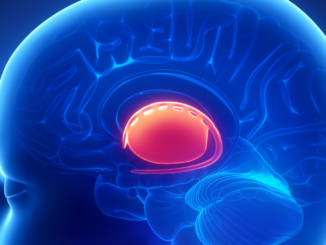
An “Artificial Cerebellum” Adaptive Stabilization of a Control System

June 27, 1994 WM Bill Powers, Biology & Neuroscience, Papers

William T. Powers

Proceedings of the 1st European Workshop on Perceptual Control Theory
Gregynog, The University of Wales
23rd – 27th June 1994

Powers_cerebellumDownload
  • PCT
  • science

Related Articles

Other

The Principles of Perceptual Control Theory (PCT)

August 6, 2023 WM Other, Psychology & Mental Health

Warren Mansell

Bill Powers

On Computing Output

April 17, 2022 Dag Forssell Bill Powers, Papers, PCT

Notes on the notion that the brain plans our movements and issues commands to muscles, pre-computing the precise muscle movements for people or robots. […]

Bill Powers

BYTE Articles

April 16, 2022 Dag Forssell Bill Powers, Papers, PCT, Robotics and AI

The BYTE articles are a book unto themselves – a four-part introduction to PCT and modeling. […]

Copyright © 2022 iapct.org